
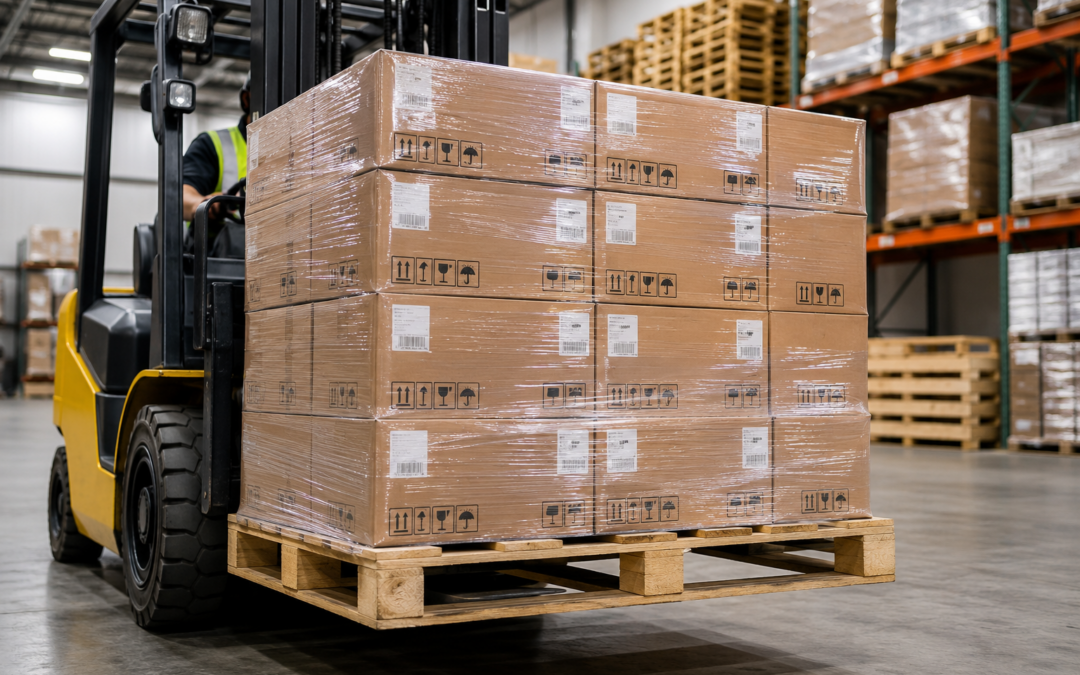
Whether you’re shipping products across the country, storing inventory in a warehouse, or purchasing pallets for your business, one question comes up more than almost any other: how much weight can a standard pallet hold?
The answer isn’t as simple as a single number. While many standard wooden pallets can safely support thousands of pounds, the actual weight capacity depends on several factors, including pallet construction, lumber quality, how the load is distributed, and whether the pallet is being stored or transported.
Understanding pallet load capacity helps prevent damaged products, workplace accidents, and unnecessary replacement costs. In this guide, we’ll explain how much weight can a standard pallet hold, what affects its strength, and how to choose the right pallet for your specific application.
How Much Weight Can a Standard Pallet Hold? It Starts with Understanding Standard Pallets
In North America, the most common pallet is the 48-inch by 40-inch wooden pallet. This size is widely used across manufacturing, distribution, warehousing, food processing, and retail industries.
Standard pallets are designed to work efficiently with forklifts, pallet jacks, warehouse racking systems, and trailers. Because they are the industry standard, replacement pallets and compatible shipping equipment are readily available.
However, not every 48×40 pallet is built the same. Two pallets with identical dimensions can have significantly different weight capacities depending on how they were manufactured.
How Much Weight Can a Standard Pallet Hold?
The short answer is that a quality standard wooden pallet can often support:
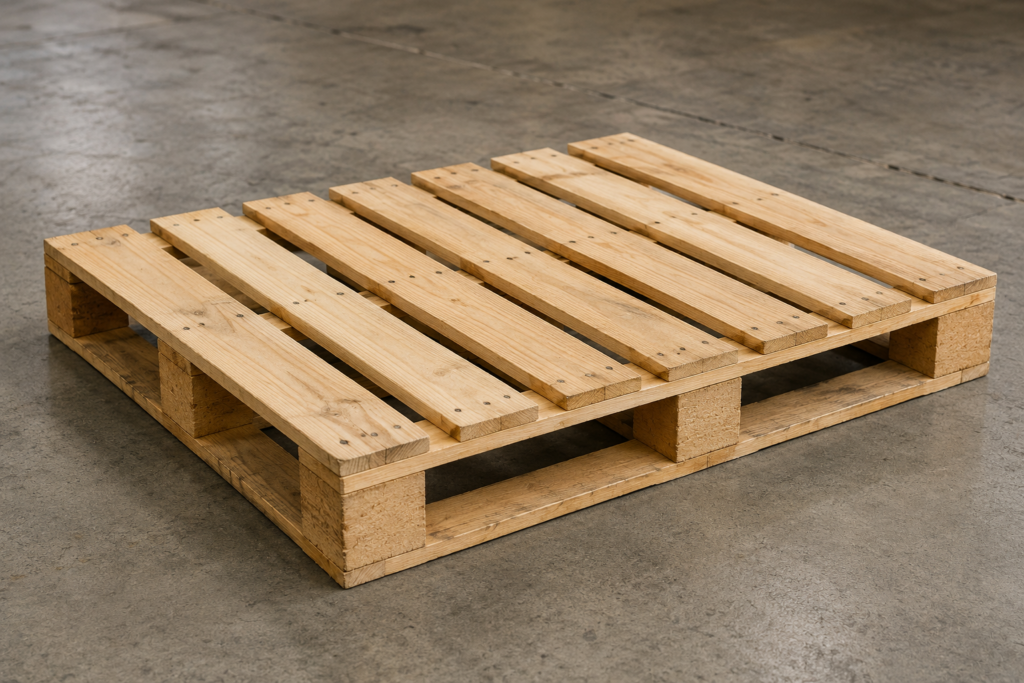
- Static load: Up to approximately 4,600 pounds
- Dynamic load: Approximately 2,500 to 3,000 pounds
- Racking load: Approximately 2,000 to 2,500 pounds
These numbers are general industry guidelines rather than universal ratings. Every pallet is different, and actual capacity depends on the pallet’s design, materials, and condition.
When asking how much weight can a standard pallet hold, it’s important to understand the three different types of load ratings.
How Much Weight Can a Standard Pallet Hold Under a Static Load?
A static load is the amount of weight a pallet can safely support while sitting flat on the ground.
When the pallet is resting on a warehouse floor with the weight evenly distributed, it experiences minimal stress. This allows it to support the greatest amount of weight.
Static load capacity is commonly used when pallets are stacked in storage areas or staging locations before shipment.
How Much Weight Can a Standard Pallet Hold While Being Moved?
Dynamic load refers to the weight a pallet can safely carry while being moved by equipment such as:
- Forklifts
- Pallet jacks
- Conveyor systems
Moving a loaded pallet places additional stress on the boards, stringers, and fasteners. Sudden stops, uneven floors, and turning corners all increase the forces acting on the pallet.
For this reason, dynamic load ratings are always lower than static load ratings.
How Much Weight Can a Standard Pallet Hold in Warehouse Racking?
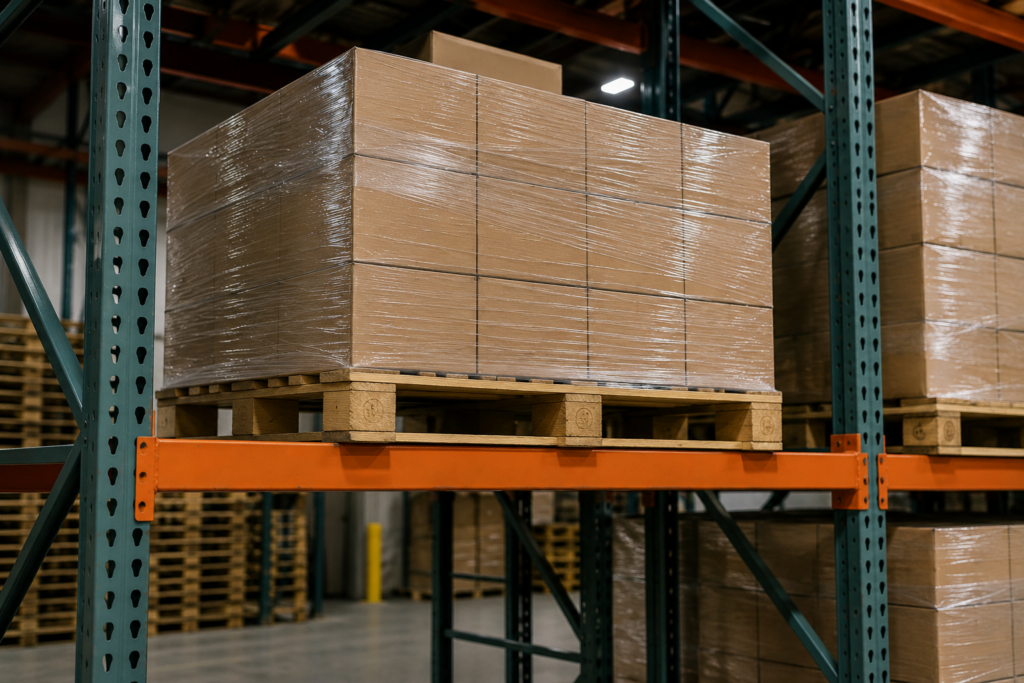
Warehouse racking places the greatest stress on a pallet.
Instead of being fully supported by the floor, only the ends of the pallet are supported by the rack beams. The center of the pallet must carry the weight of the load without sagging or breaking.
If your pallets will be stored in pallet racking, selecting the proper design and construction is essential.
What Affects How Much Weight a Standard Pallet Can Hold?
Several variables determine a pallet’s strength.
Lumber Quality
Higher-grade lumber creates stronger pallets.
Wood species, moisture content, and board quality all influence how much weight a pallet can safely support.
Hardwood pallets typically provide greater durability and strength than many softwood options, although properly designed softwood pallets can also perform exceptionally well.
Number of Deck Boards
More deck boards generally improve weight distribution.
A pallet with additional deck boards can better spread heavy loads across the surface, reducing pressure on individual boards.
Stringer Thickness
Stringers are the structural backbone of many pallets.
Thicker, stronger stringers increase load capacity while reducing flexing during transportation.
Block vs. Stringer Design
Block pallets generally provide greater strength and four-way forklift access.
Stringer pallets remain popular because they offer excellent performance while often being more economical.
Choosing the right style depends on your products, warehouse equipment, and shipping requirements.
Fastener Quality
Nails and fasteners play an important role in pallet performance.
Poorly fastened boards can loosen over time, reducing structural integrity and increasing the likelihood of failure under heavy loads.
Pallet Condition
New pallets generally provide maximum strength.
Used or recycled pallets may still perform extremely well when properly inspected and repaired, but damaged boards, cracked stringers, loose nails, or excessive wear can reduce their weight capacity.
Why Even Weight Distribution Matters
Even the strongest pallet can fail if weight isn’t distributed properly.
Concentrating several thousand pounds in one small area creates excessive stress on individual boards.
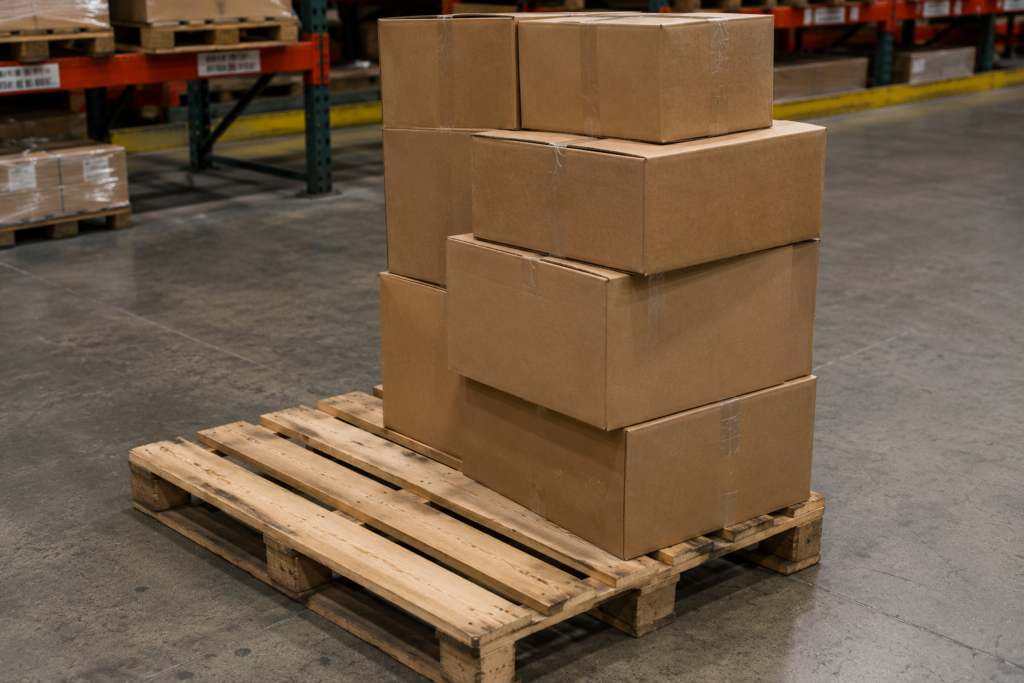
To maximize pallet performance:
- Center heavy products whenever possible.
- Distribute weight evenly.
- Avoid overhanging loads.
- Secure products to prevent shifting during transport.
- Use stretch wrap or banding when appropriate.
Proper loading helps protect both your products and your pallets.
Can Recycled Pallets Hold the Same Weight?
Many businesses assume recycled pallets are significantly weaker than new pallets.
In reality, a properly repaired and inspected recycled pallet can safely handle many commercial shipping applications.
Professional pallet recyclers inspect pallets for structural damage before returning them to service.
Damaged boards are replaced, loose fasteners are repaired, and unusable pallets are removed from circulation.
For many businesses, recycled pallets provide an excellent balance between performance and cost savings.
When Should You Choose a Custom Pallet?
Sometimes a standard pallet simply isn’t the best solution.
Custom pallets are ideal when shipping:
- Heavy machinery
- Industrial equipment
- Oversized products
- Building materials
- Large manufacturing components
- Irregularly shaped items
Custom engineering allows pallet dimensions, lumber thickness, deck board spacing, and structural support to be tailored for the exact application.
If your products consistently exceed typical pallet capacities or require specialized handling, a custom pallet may improve both safety and shipping efficiency.
Signs a Pallet Shouldn’t Be Used
Weight capacity isn’t just about design—it’s also about condition.
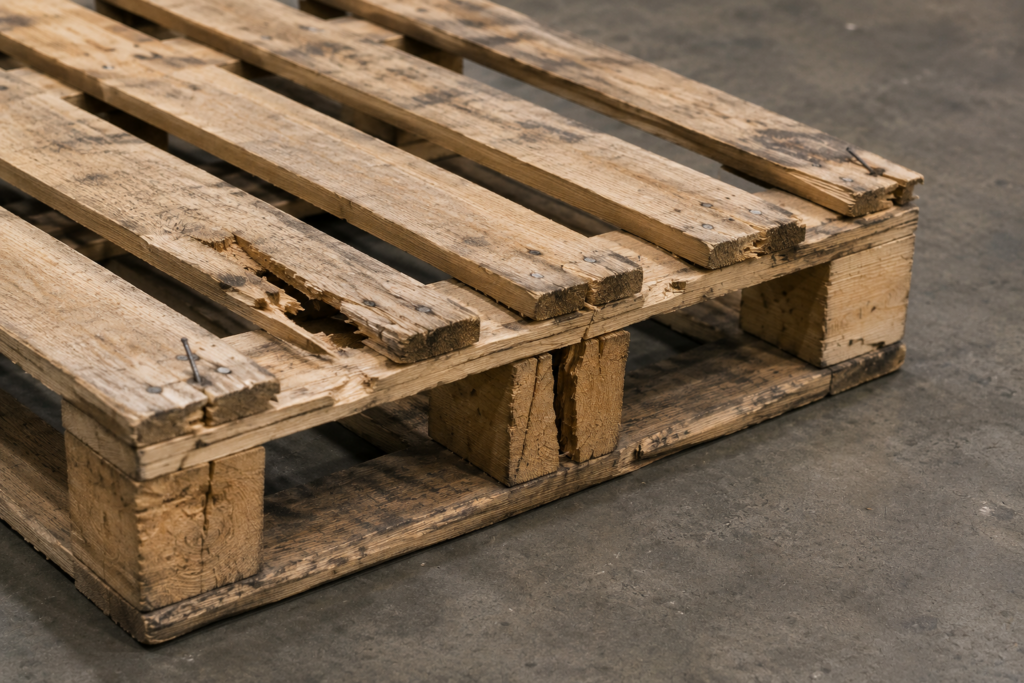
Inspect pallets before every use and look for:
- Broken deck boards
- Split stringers
- Missing boards
- Loose nails
- Excessive warping
- Water damage
- Rot or decay
- Large cracks
Using a damaged pallet increases the risk of product damage, injuries, and shipping delays.
Replacing worn pallets before failure is often far less expensive than dealing with damaged inventory.
Choosing the Right Pallet for Your Business
Rather than focusing only on maximum weight capacity, consider your entire operation.
Ask questions such as:
- Will the pallet be stored on warehouse racks?
- Is it being shipped internationally?
- Will forklifts handle it frequently?
- Is the load evenly distributed?
- Will pallets be reused multiple times?
- Are recycled pallets appropriate?
- Would a custom pallet provide better long-term value?
Working with an experienced pallet supplier helps ensure you receive pallets designed for your specific products and handling requirements.
Why Choosing the Right Supplier Matters
A reputable pallet supplier does more than simply deliver pallets.
They help determine the appropriate pallet design, lumber grade, construction method, and load capacity based on your operation.
Whether your business requires standard pallets, recycled pallets, heat-treated pallets, or custom-built solutions, selecting the right pallet from the beginning helps improve safety, reduce product damage, and lower long-term costs.
Conclusion
If you’ve ever wondered how much weight can a standard pallet hold, the answer depends on far more than its dimensions. Construction, materials, condition, and how the pallet is used all influence its actual load capacity.
Choosing the right pallet for your products helps protect inventory, improve workplace safety, and maximize shipping efficiency. Whether you need standard pallets, recycled pallets, heat-treated pallets, or a custom solution built for heavier loads, working with an experienced pallet supplier ensures you receive products that match your operational needs.
If you have questions about selecting the right pallet for your application, Contact Us here to reach out to our team. If you’re ready to discuss your pallet needs or would like pricing for your next order, you can also submit a Quote Request here. We’re here to help you find the right solution for your business.
Further Reading
- National Wooden Pallet & Container Association (NWPCA): https://www.palletcentral.com/
- USDA Wood Handbook: https://www.fs.usda.gov/research/treesearch/62200
- OSHA Material Handling Guide: https://www.osha.gov/materials-handling
- Virginia Tech Center for Packaging and Unit Load Design: https://unitload.vt.edu/