
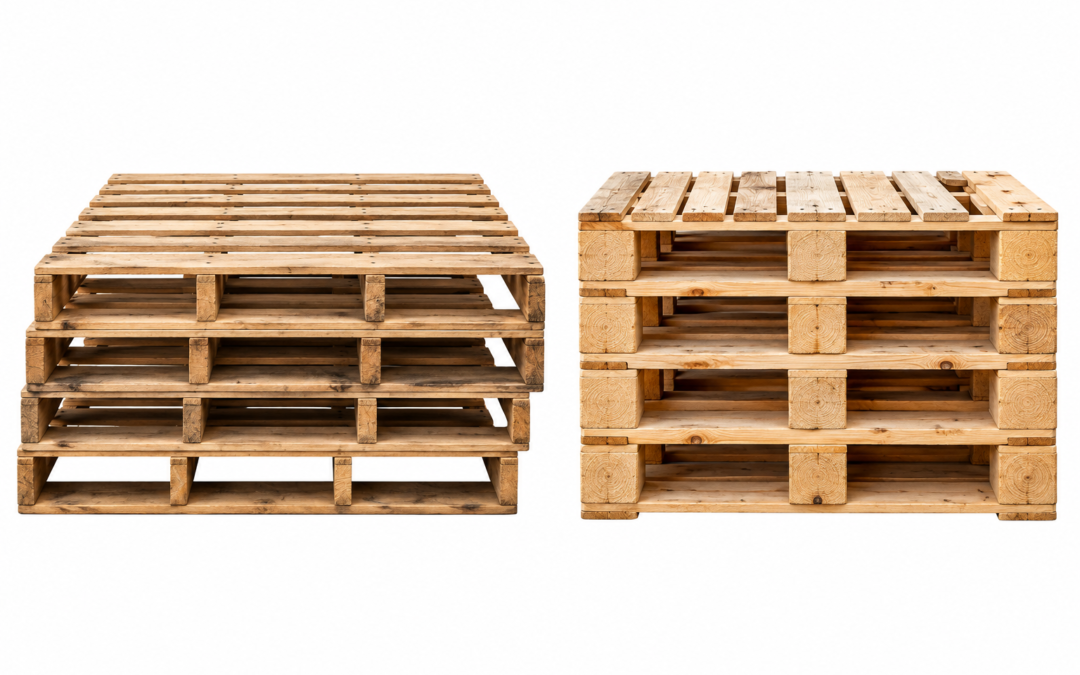
Wooden pallets are essential to shipping, warehousing, manufacturing, and distribution. They support products during transportation, make inventory easier to organize, and allow forklifts and pallet jacks to move heavy loads efficiently. However, not all wooden pallets are constructed the same way, and choosing the wrong design can create unnecessary challenges for a business.
One of the most common comparisons in the pallet industry is Block Pallets vs. Stringer Pallets. Although both designs serve similar purposes, they have important differences in construction, accessibility, durability, cost, and performance.
Block pallets use individual supporting blocks to create their structure, while stringer pallets rely on continuous wooden boards called stringers. These construction differences influence how pallets are handled, how they distribute weight, and which applications they are best suited for.
Understanding Block Pallets vs. Stringer Pallets is particularly important for businesses purchasing pallets in large quantities, managing warehouse operations, or considering custom pallet solutions.
In this guide, we will explore seven essential differences between these pallet designs, explain their advantages and limitations, and help you determine which option may be right for your business.
What Are Block Pallets?
Block pallets are wooden pallets constructed using individual blocks positioned between the upper and lower deck structures.
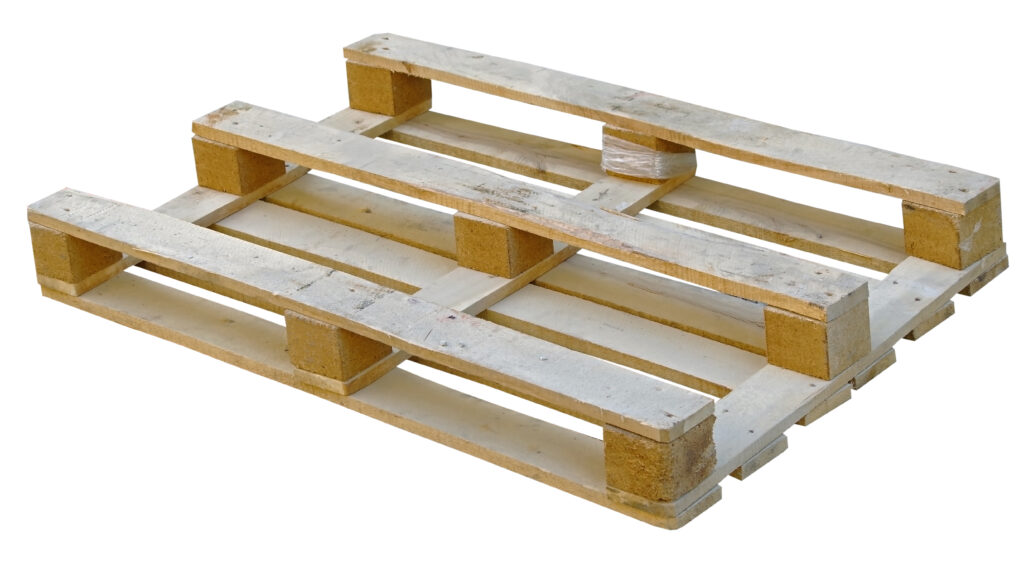
Most conventional block pallet designs use nine supporting blocks arranged in three rows. These blocks create openings that allow compatible forklifts and pallet jacks to access the pallet from multiple directions.
Block pallets are commonly designed for four way entry, meaning material handling equipment can approach from all four sides.
This flexibility can be especially useful in distribution centers, manufacturing facilities, and warehouses where pallets must frequently be repositioned.
Block pallets may also incorporate stringerboards or other supporting components that connect the blocks and provide additional structural support.
Their performance depends on the materials, dimensions, fastening methods, and engineering specifications used during manufacturing.
What Are Stringer Pallets?
Stringer pallets use long, continuous wooden boards called stringers to support the pallet’s deck boards.
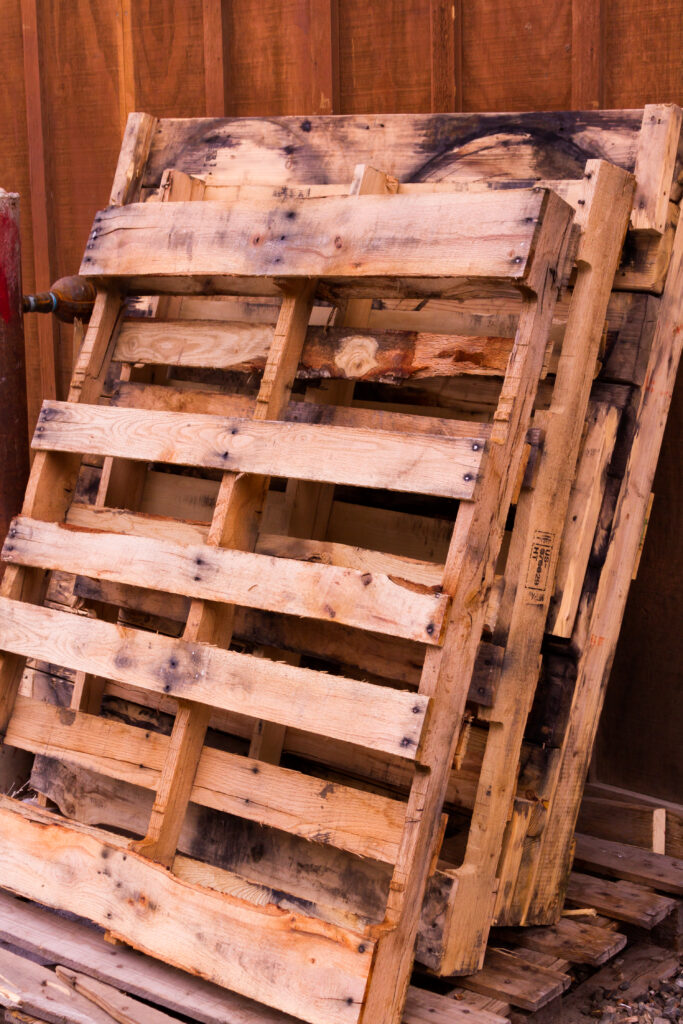
Most traditional stringer pallets contain three parallel stringers positioned between the top and bottom deck boards.
These structural members provide support and create openings for forklift access.
Stringer pallets are widely used throughout North America because they offer a practical combination of straightforward construction, availability, and versatility.
They can be manufactured in different sizes, repaired when appropriate, and customized to accommodate specific products.
Traditional stringer pallets generally provide two way forklift entry. However, notched stringers can allow forklift access from additional directions.
When evaluating Block Pallets vs. Stringer Pallets, understanding their basic construction is the first step toward selecting the appropriate design.
1. Block Pallets vs. Stringer Pallets: Construction Differences
The primary difference between block pallets and stringer pallets is how their structural support systems are arranged.
How Block Pallets Are Constructed
Block pallets typically consist of top deck boards, supporting blocks, stringerboards where required, and bottom deck components.
The blocks are positioned at strategic locations to support the deck and distribute loads.
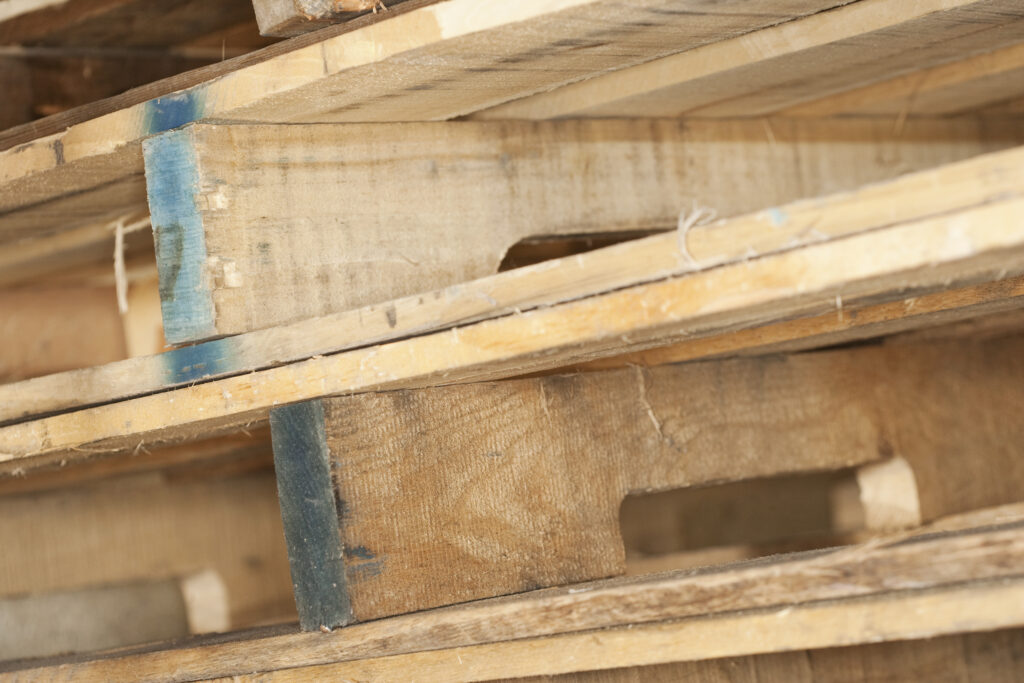
Because the pallet uses individual support points rather than continuous stringers, the openings between those blocks can provide access from multiple directions.
This design is often beneficial in operations where pallets need to be approached from different sides.
However, block pallets may require additional components and assembly steps compared with conventional stringer pallets.
How Stringer Pallets Are Constructed
Stringer pallets use continuous boards running along the length of the pallet.
Deck boards are fastened across these structural members to create the loading surface.
The stringers help support the load and maintain the pallet’s overall structure.
Some stringer pallets include notches that allow forklift forks to enter from the sides.
The dimensions, lumber species, board thickness, and fastening methods all influence the finished pallet’s performance.
Neither construction method is automatically superior. Each offers advantages depending on the intended application.
2. Block Pallets vs. Stringer Pallets: Forklift Accessibility
Forklift access is one of the most significant differences between the two designs.
Two Way Entry
Traditional stringer pallets without notches generally provide two way forklift entry.
This means a forklift can enter from two opposite ends of the pallet.
For warehouses with predictable traffic patterns and established loading procedures, this arrangement may work well.
However, limited access can create difficulties when pallets are positioned in tight spaces or need to be moved from another direction.
Four Way Entry
Block pallets commonly provide four way entry, allowing compatible material handling equipment to access the pallet from all four sides.
This can improve flexibility when positioning pallets in trailers, warehouses, and distribution facilities.
Notched stringer pallets may also provide four way forklift entry, although the openings may not offer the same accessibility for pallet jacks.
It is important to understand that forklift access and pallet jack access are not always identical.
Some pallet jacks require specific bottom deck configurations or entry clearances.
When comparing Block Pallets vs. Stringer Pallets, businesses should evaluate the equipment used in their facility rather than assuming all four way pallets function the same way.
3. Block Pallets vs. Stringer Pallets: Strength and Load Capacity
Strength is another important consideration when choosing wooden pallets.
Businesses frequently assume block pallets are stronger because they contain multiple support points. Others believe stringer pallets are more durable because they use continuous structural boards.
Neither assumption is universally correct.
Pallet strength depends on several factors, including:
- Lumber species and quality
- Deck board thickness
- Block or stringer dimensions
- Fastener type and placement
- Overall pallet design
- Load weight and distribution
- Storage conditions
- Handling methods
A properly designed stringer pallet can support demanding loads, while a block pallet built for lighter applications may have lower load limits.
Likewise, an engineered block pallet may provide excellent performance for heavy products.
Static Load Capacity
Static load capacity refers to the weight a pallet can support while resting on a stable surface under specified conditions.
Dynamic Load Capacity
Dynamic load capacity refers to the load a pallet can support while being moved or handled, such as during forklift transportation.
Racking Load Capacity
Racking capacity describes how a pallet performs when supported by warehouse rack beams or another specified racking arrangement.
These capacities can differ significantly for the same pallet.
When evaluating Block Pallets vs. Stringer Pallets, the actual load requirements should guide the decision.
A pallet manufacturer can help determine which construction style and specifications are appropriate for the intended application.
4. Block Pallets vs. Stringer Pallets: Cost Differences
Cost plays an important role in pallet purchasing decisions, particularly for businesses that order large quantities.
Stringer pallets are often more economical for common applications because their construction is relatively straightforward.
Their widespread use also makes standard stringer pallet configurations readily available in many markets.
Block pallets may require more components or different manufacturing processes, which can increase production costs.
However, pricing depends on several variables.
Lumber costs, pallet dimensions, material specifications, order quantities, manufacturing requirements, and market availability can all influence the final price.
Considering Long Term Costs
The initial purchase price is only one part of the overall cost.
Businesses should also consider how frequently pallets will be reused, whether they can be repaired, and how efficiently they work with existing equipment.
A pallet that costs more initially may provide operational advantages that justify the expense.
For example, a four way entry pallet may reduce handling difficulties in a facility where operators frequently approach loads from different directions.
When comparing Block Pallets vs. Stringer Pallets, the most economical choice is the one that meets the business’s requirements without introducing unnecessary costs or complications.
5. Block Pallets vs. Stringer Pallets: Durability and Repairability
Wooden pallets are often reused multiple times throughout their service life.
Because of this, durability and repairability are important considerations.
Stringer Pallet Repairs
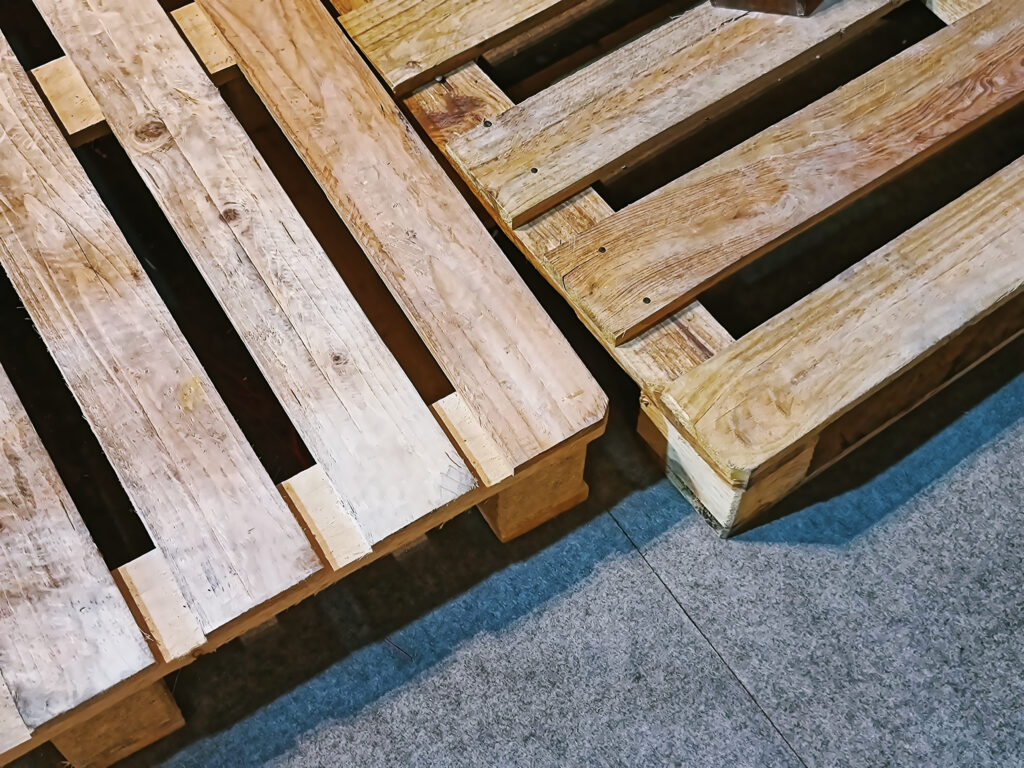
Stringer pallets have a relatively simple structure, which can make certain repairs straightforward.
Damaged deck boards may be replaced, and some damaged stringers can be repaired using appropriate methods and materials.
However, severe structural damage may make a pallet unsuitable for continued use.
Block Pallet Repairs
Block pallets can also be repaired.
Depending on the construction, damaged blocks, deck boards, and supporting components may be replaced.
The repair process must account for the pallet’s original design and intended performance.
Which Lasts Longer?
Neither pallet style automatically has a longer lifespan.
Durability depends on construction quality, handling practices, load conditions, moisture exposure, and maintenance.
Repeated forklift impacts, overloading, and improper storage can damage either design.
For businesses that reuse pallets regularly, selecting a design suited to the expected handling conditions can help extend service life.
6. Block Pallets vs. Stringer Pallets: Warehouse Efficiency
Warehouse efficiency depends on how easily products can be moved, stored, and retrieved.
The pallet design can influence these activities.
Advantages of Block Pallets in Warehouses
Block pallets can provide greater flexibility when operators need access from multiple directions.
This may be particularly helpful in facilities with limited maneuvering space or frequent pallet repositioning.
Four way entry can also simplify certain loading and unloading operations.
Advantages of Stringer Pallets in Warehouses
Stringer pallets are commonly used in facilities with established material handling procedures.
When pallets are consistently approached from the same directions, two way entry may be sufficient.
Stringer pallets can also be manufactured with notches or other design features to improve accessibility.
Compatibility With Warehouse Equipment
Pallet design should be evaluated alongside the equipment used in the facility.
Forklifts, pallet jacks, conveyors, automated storage systems, and warehouse racking may have different requirements.
For example, a pallet that works well on a warehouse floor may not be suitable for unsupported storage in a pallet rack.
When comparing Block Pallets vs. Stringer Pallets, compatibility with existing equipment is often just as important as price or construction.
7. Block Pallets vs. Stringer Pallets: Shipping Applications
The final major difference involves how each pallet design fits different shipping requirements.
Domestic Shipping
Stringer pallets are commonly used for domestic shipments because of their availability and practical construction.
They can be manufactured in standard dimensions and customized for different products.
Block pallets are also used domestically, particularly when four way entry or specific handling characteristics are needed.
International Shipping
Businesses shipping products internationally may need wooden pallets that comply with ISPM 15 requirements.
These regulations are designed to reduce the international movement of pests through wood packaging materials.
Depending on the destination and applicable requirements, wooden pallets may need approved treatment and appropriate markings.
Both block pallets and stringer pallets can be manufactured to meet applicable ISPM 15 requirements.
The construction style itself does not determine compliance.
Reusable Shipping Systems
Some businesses use pallets repeatedly within a controlled distribution system.
In these applications, handling frequency, repairability, equipment compatibility, and expected service life can influence the preferred design.
Both block and stringer pallets may be appropriate depending on the system’s requirements.
Are Block Pallets Better Than Stringer Pallets?
After reviewing the differences between Block Pallets vs. Stringer Pallets, it is natural to wonder which option is better.
The answer depends on how the pallet will be used.
Block pallets may be beneficial when a business needs flexible forklift access, repeated handling, or a specific pallet configuration.
Stringer pallets may be more practical when cost efficiency, straightforward construction, and common shipping applications are priorities.
However, a properly designed pallet should always be selected based on its intended use rather than its general category.
A standard stringer pallet may be perfectly suitable for one business, while another operation may require a custom block pallet.
The best choice is the design that supports the products safely and works efficiently with the company’s equipment and storage systems.
When Should Businesses Consider Custom Wooden Pallets?
Standard pallet designs work well for many applications, but some products require specialized solutions.
Custom wooden pallets can be designed around specific product dimensions, load weights, handling requirements, and shipping conditions.
For example, a business transporting oversized equipment may need a larger pallet with additional structural support.
Another business may require a particular bottom deck configuration to accommodate warehouse equipment.
Custom pallet manufacturing allows these requirements to be considered during the design process.
Both block pallets and stringer pallets can be customized.
Working with an experienced pallet manufacturer helps businesses select appropriate dimensions, materials, and construction methods for their intended application.
How to Choose the Right Wooden Pallet for Your Business
Before purchasing pallets, businesses should evaluate their operational requirements.
Start by identifying the weight, dimensions, and characteristics of the products being shipped.
Next, consider how the pallets will be handled. Determine whether forklifts, pallet jacks, or automated equipment will be used.
Storage requirements should also be reviewed. Pallets intended for warehouse racking may need different specifications than pallets stored directly on the floor.
Businesses should also consider whether the pallets will be reused, repaired, recycled, or shipped internationally.
Finally, evaluate the overall cost of ownership rather than focusing exclusively on the purchase price.
Taking these factors into account can help businesses make informed decisions when evaluating Block Pallets vs. Stringer Pallets.
Conclusion
Understanding Block Pallets vs. Stringer Pallets is an important part of choosing the right wooden pallet for shipping, storage, and warehouse operations.
Block pallets use individual supporting blocks and commonly provide four way entry, offering flexibility for material handling. Stringer pallets use continuous structural boards and are widely used because of their straightforward construction, availability, and economical design.
The seven major differences involve construction, forklift accessibility, strength, cost, durability, warehouse efficiency, and shipping applications.
Neither design is automatically the best choice for every business.
When comparing Block Pallets vs. Stringer Pallets, businesses should consider their products, equipment, storage systems, shipping requirements, and budget.
Selecting the appropriate pallet can help improve handling efficiency, reduce unnecessary expenses, and support reliable transportation.
At Palleton Pallets, we understand that every business has different pallet requirements. Whether you need new wooden pallets, recycled pallets, or a custom pallet solution, choosing the right design is essential.
If you have questions about Block Pallets vs. Stringer Pallets or need assistance determining which pallet style may be appropriate for your operation, contact us here and our team will be happy to help. If you are ready to discuss your pallet specifications and pricing, you can also submit a quote request here.
Further Reading
National Wooden Pallet and Container Association, Uniform Standard for Wood Pallets
https://woodpackglobal.org/page/packagingstandards
USDA Forest Products Laboratory, Wood Handbook: Wood as an Engineering Material
https://research.fs.usda.gov/fpl/wood-handbook
USDA APHIS, Wood Packaging Material
https://www.aphis.usda.gov/plant-imports/wood-packaging-material
National Wooden Pallet and Container Association
https://palletcentral.com/