
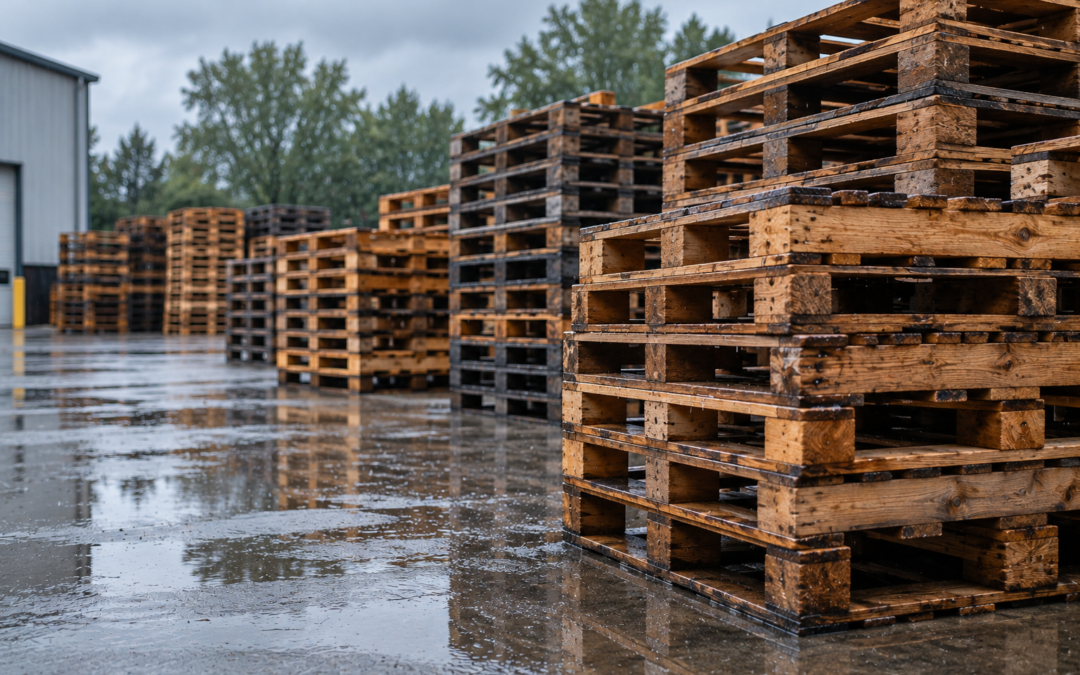
Wooden pallets are built to handle demanding environments. They move through warehouses, loading docks, trucks, manufacturing facilities, and storage areas while supporting products that can weigh hundreds or even thousands of pounds. During all that handling, pallets can encounter changing temperatures, humidity, rain, condensation, and other sources of moisture.
So, how does moisture affect wooden pallets?
Wood naturally interacts with moisture in its surrounding environment. It can absorb and release moisture as conditions change. That does not mean a wooden pallet is ruined simply because it gets wet. However, prolonged or repeated exposure to moisture can affect the wood’s dimensions, condition, strength, and service life.
For businesses that rely on wooden pallets for storage and transportation, understanding the effects of moisture can help prevent damaged pallets, unstable loads, mold problems, and unnecessary replacement costs.
How Does Moisture Affect Wooden Pallets?
To understand how does moisture affect wooden pallets, it helps to understand how wood responds to its environment.
Wood is hygroscopic, meaning it naturally exchanges moisture with the surrounding air. The amount of moisture wood gains or loses is influenced by relative humidity, temperature, and the amount of moisture already present in the wood.
As moisture content changes, the physical properties of wood can change as well.
This process happens naturally throughout the life of a wooden pallet. Small fluctuations in humidity are not necessarily a problem. More significant or prolonged exposure to moisture, however, can contribute to swelling, shrinking, warping, mold growth, decay, and changes in mechanical performance.
The environment in which pallets are stored and used therefore matters just as much as how they are manufactured and handled.
Moisture Can Cause Wood to Swell
When wood gains moisture within its cell walls, it expands.
For a wooden pallet, this dimensional change can affect individual deck boards, stringers, blocks, and other components. A small amount of movement is normal because wood is a natural material.
Problems can develop when pallets repeatedly move between very wet and very dry conditions.
Boards may expand as they absorb moisture and shrink again as they dry. Over time, these cycles can contribute to dimensional changes and stress within the wood.
The amount of movement varies based on the wood species, direction of the grain, initial moisture content, and surrounding conditions.
This is one reason proper drying and storage are important for maintaining consistent pallet performance.
Drying Can Cause Shrinking and Checking
Moisture problems are not limited to wood becoming wet.
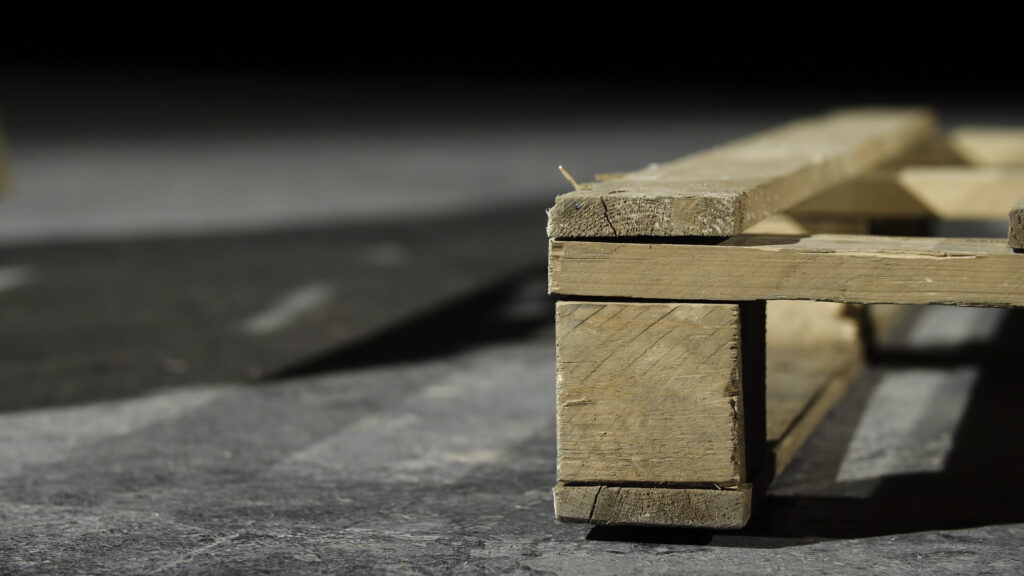
What happens when wet wood dries is equally important.
As moisture leaves wood, the wood can shrink. Because wood does not shrink equally in every direction, drying can sometimes cause boards to warp, check, or split.
Checking refers to cracks that develop as wood dries. Small checks are common in lumber and do not automatically make a pallet unusable. More severe splitting, however, may eventually affect a pallet component’s ability to perform as intended.
Rapid or uneven changes in moisture can make these problems more noticeable.
That is why moisture management is not simply about keeping every drop of water away from a pallet. The goal is to avoid prolonged exposure and extreme changes that can negatively affect the wood.
How Does Moisture Affect Wooden Pallets and Their Strength?
Moisture content can influence the mechanical properties of wood.
This becomes especially important for pallets because their primary job is to support products during storage, transportation, and material handling.
The effect is not as simple as saying that any wet pallet is weak or unsafe. Wood species, pallet design, lumber quality, fasteners, load distribution, and the severity and duration of moisture exposure all matter.
However, wood properties can change as moisture content changes. Research from the USDA Forest Products Laboratory has long recognized moisture content as an important consideration in pallet design and performance.
For businesses handling heavy products, pallet condition should always be considered alongside the expected load.
If a pallet has been exposed to significant moisture and also shows splitting, decay, severe warping, loose connections, or other structural damage, it should be inspected before being returned to service.
Moisture Can Contribute to Warping
Warping is one of the most visible ways moisture can affect lumber.
A pallet that was once relatively flat may begin to develop bowed or twisted boards after repeated changes in moisture.
Severe warping can create several problems.
An uneven pallet may not sit correctly on the warehouse floor. Loads may become less stable. Forklift and pallet jack access can become more difficult. Warped components can also cause problems in automated material handling systems where consistent pallet dimensions are particularly important.
Minor dimensional changes do not necessarily mean a pallet needs to be replaced.
However, if warping prevents the pallet from sitting properly or interferes with safe handling, the pallet should be removed from service and evaluated.
Moisture Creates Conditions That Can Support Mold
Another major concern associated with pallet moisture is mold.
Mold requires suitable environmental conditions to grow, and moisture is an important part of that equation. Warm temperatures, available nutrients, moisture, and limited drying conditions can create an environment where mold develops on wood surfaces.
A pallet getting briefly wet does not guarantee that mold will appear.
The bigger problem occurs when pallets remain damp and do not have enough airflow to dry.
For example, tightly packed pallets stored in a humid, poorly ventilated area may retain moisture longer than pallets stored where air can circulate freely.
Mold can create appearance concerns and may be unacceptable for certain products, facilities, or customers. Preventing prolonged damp conditions is therefore an important part of pallet storage.
Mold and Wood Decay Are Not the Same Thing
It is important to distinguish surface mold from structural decay.
Mold can grow on the surface of wood without necessarily causing the type of structural deterioration associated with decay fungi.
Decay is more serious because it can damage the wood itself and reduce its mechanical properties.
According to research from the USDA Forest Products Laboratory, significant decay generally requires sustained moisture conditions. Keeping wood dry is one of the most effective ways to prevent decay from beginning or progressing.
For pallet users, the key takeaway is that a pallet should not be judged solely by appearance.
Surface discoloration and mold deserve attention, but soft, crumbling, deteriorated wood is a much more serious structural concern.
Pallets showing signs of decay should be removed from service and professionally evaluated.
How Does Moisture Affect Wooden Pallets During Storage?
Storage conditions can have a major impact on moisture exposure.
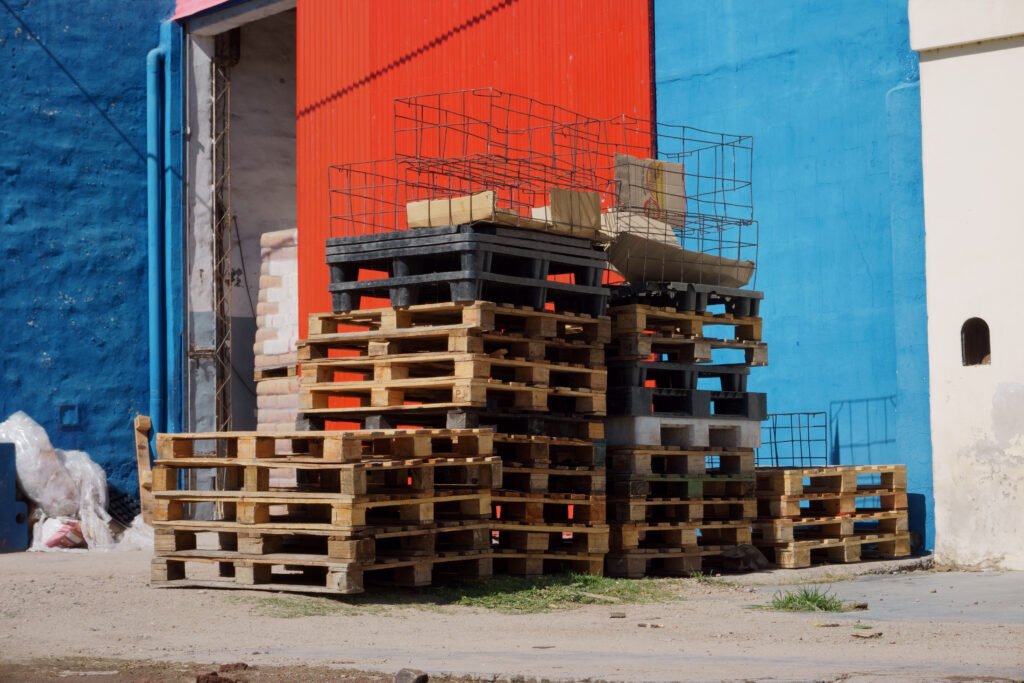
Even pallets that arrive in good condition can develop problems if they are stored improperly.
Whenever possible, wooden pallets should be protected from prolonged exposure to rain, standing water, wet ground, and environments where they cannot dry adequately.
Air circulation is particularly important.
When pallets are stacked tightly in damp conditions with little airflow, moisture can remain trapped between surfaces. Providing adequate ventilation helps moisture escape and allows the wood to dry more effectively.
The storage area itself should also be considered.
Water leaking through a roof, condensation, poor drainage, or direct contact with wet flooring can expose the bottom pallets in a stack to moisture even when the rest of the facility appears dry.
Routine inspection of pallet storage areas can help identify these problems early.
Can Wooden Pallets Be Stored Outside?
Wooden pallets are frequently stored outdoors, but outdoor storage creates additional challenges.
Rain, snow, humidity, standing water, and ground contact can all increase moisture exposure.
If outdoor storage is necessary, keeping pallets off wet ground and protecting them from direct precipitation can help. Good drainage around the storage area is also important so that pallets are not sitting in standing water.
Airflow should still be maintained.
Completely wrapping damp pallets in a way that prevents drying can trap moisture rather than solve the problem.
Businesses that regularly store pallets outdoors should inspect their inventory for signs of excessive moisture, mold, warping, decay, and physical damage before the pallets are returned to service.
What About a Pallet That Gets Caught in the Rain?
A pallet getting wet once does not automatically mean it needs to be discarded.
Wood is capable of drying.
The bigger concern is what happens after the pallet becomes wet.
If a pallet is allowed to dry in a well ventilated environment and remains structurally sound, brief exposure to rain may not cause a lasting problem.
On the other hand, pallets that remain wet for extended periods deserve closer attention.
Before using a pallet that has been heavily exposed to water, inspect it for:
- Severe warping
- Cracked or split boards
- Loose fasteners
- Soft or deteriorating wood
- Mold growth
- Damaged blocks or stringers
- Unstable or uneven components
If the pallet appears structurally questionable, set it aside for further evaluation rather than immediately placing it back into circulation.
Does Heat Treatment Make Pallets Waterproof?
No.
This is an important distinction because heat treatment and moisture resistance are two different things.
Heat treatment is commonly associated with ISPM 15 requirements for wood packaging material used in international trade. Under the U.S. heat treatment program, qualifying wood packaging material must reach a minimum wood core temperature of 56 degrees Celsius for at least 30 minutes.
The purpose of this treatment is phytosanitary. It is intended to address pests that could be transported internationally in wood packaging material.
Heat treatment does not make wood waterproof.
A heat treated pallet can still absorb moisture after treatment if it is exposed to rain, high humidity, condensation, or other sources of water.
Businesses using heat treated pallets should therefore continue to follow good storage and handling practices.
Repeated Wetting and Drying Can Cause Problems
One wetting event may not be particularly significant, but repeated exposure can be harder on a pallet.
Imagine pallets stored outdoors where they are repeatedly soaked by rain and then dried by the sun.
The wood continually gains and loses moisture.
Over time, repeated dimensional changes may contribute to checking, splitting, warping, or loosened connections.
Existing damage can also become more important as the pallet ages.
This is why regular inspection is particularly important for pallets that experience demanding environmental conditions.
How to Reduce Moisture Problems With Wooden Pallets
Understanding how does moisture affect wooden pallets makes prevention much easier.
Businesses can reduce moisture related problems by using a few practical storage and handling practices.
Keep pallets protected from prolonged direct exposure to rain and snow whenever possible.
Avoid placing pallets directly in standing water or on consistently wet surfaces.
Maintain good airflow around stored pallets so that moisture can escape.
Inspect storage buildings for roof leaks, condensation, drainage problems, and other sources of water.
Rotate pallet inventory rather than allowing older pallets to remain unused in damp areas for long periods.
Inspect pallets that have experienced significant water exposure before returning them to service.
Most importantly, pay attention to the condition of the pallet rather than assuming that a pallet is safe simply because it has dried.
When Should a Moisture Exposed Pallet Be Replaced?
Moisture exposure alone does not automatically determine whether a pallet should be repaired, recycled, or replaced.
Condition matters.
A pallet that became wet but dried properly and remains structurally sound may still be usable.
A pallet with severe warping, decay, extensive splitting, deteriorated lumber, or damaged connections may require professional repair or removal from service.
The intended application should also be considered.
Pallets supporting heavy products, entering warehouse racking, traveling through automated systems, or being used for sensitive products may require closer inspection than pallets used in less demanding applications.
When there is uncertainty, having the pallet evaluated by an experienced pallet provider is preferable to taking an unnecessary risk.
Why Proper Pallet Storage Matters
Pallet storage may seem like a small part of warehouse operations, but it can have a significant impact on pallet life.
Wooden pallets are durable, repairable, and reusable, which is part of what makes them valuable for transportation and material handling.
Protecting that investment requires reasonable care.
Keeping pallets away from prolonged moisture, providing airflow, rotating inventory, and identifying damaged pallets before use can help businesses get more service from their pallet inventory.
It can also reduce the likelihood of discovering a problem after a pallet has already been loaded with valuable products.
Conclusion
So, how does moisture affect wooden pallets? Moisture can influence the dimensions, condition, mechanical properties, and long term performance of wood. Repeated or prolonged exposure can contribute to swelling, shrinking, warping, checking, mold growth, decay, and other problems.
That does not mean every pallet that gets wet needs to be discarded.
Wood naturally gains and loses moisture as environmental conditions change. The real concern is prolonged exposure, inadequate drying, repeated wetting and drying, or moisture related deterioration that begins to affect the pallet’s condition and ability to perform its job.
Understanding how does moisture affect wooden pallets can help businesses make better decisions about storage, inspection, repair, recycling, and replacement. Proper storage and routine inspections can go a long way toward extending pallet life and preventing avoidable problems.
If you have questions about pallet condition, storage, repair, recycled pallets, or choosing the right pallet for your operation, contact us here and the Palleton Pallets team can help. If you are ready to discuss your pallet requirements and pricing, you can also submit a quote request here.
Further Reading
USDA Forest Products Laboratory, Wood Handbook: Wood as an Engineering Material
USDA Forest Products Laboratory Wood Handbook
USDA Forest Products Laboratory, Moisture Relations and Physical Properties of Wood
Moisture Relations and Physical Properties of Wood
USDA Forest Products Laboratory, Drying and Control of Moisture Content and Dimensional Changes
Drying and Control of Moisture Content
USDA Forest Products Laboratory, Controlling Mold on Wood Pallets
Controlling Mold on Wood Pallets
USDA APHIS, Wood Packaging Material
USDA APHIS Wood Packaging Material