
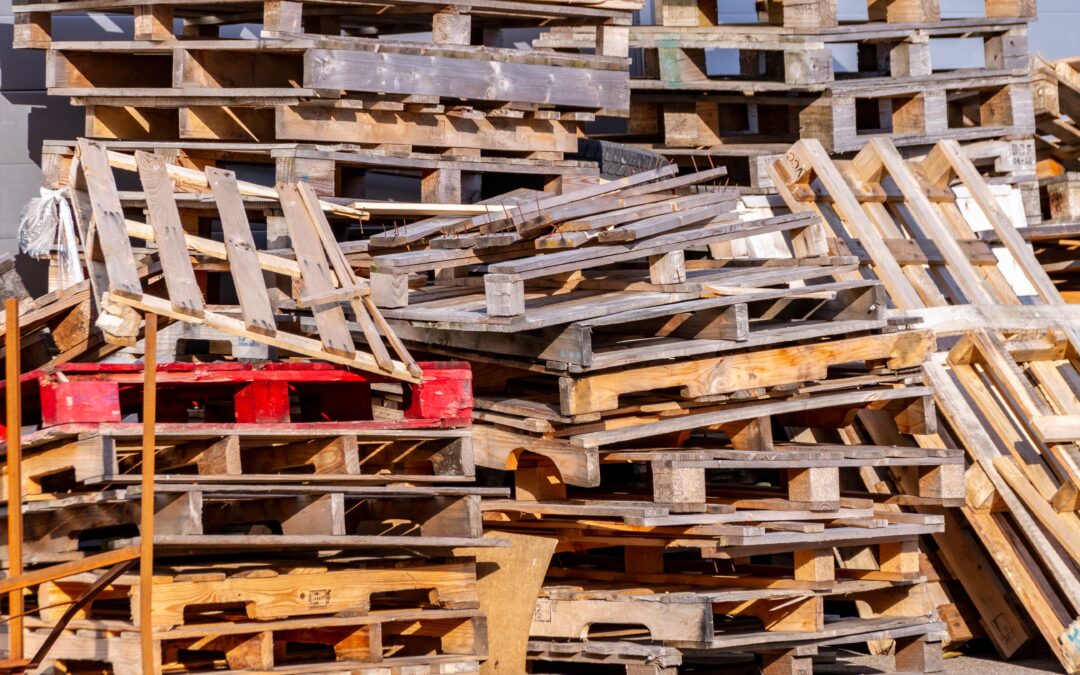
Wooden pallets are designed to withstand demanding conditions. They are lifted by forklifts, moved through warehouses, loaded into trailers, stacked with heavy products, and often reused again and again. Eventually, all that handling takes a toll.
A cracked board or loose nail does not automatically mean a pallet has reached the end of its useful life. Many wooden pallets can be professionally repaired and returned to service. In fact, pallet repair and recycling are important parts of extending the useful life of wood packaging.
But when is a wooden pallet too damaged to repair?
There comes a point when damage becomes extensive enough that continuing to repair a pallet may no longer be safe, practical, or economical. Knowing how to recognize that point can help businesses protect employees, products, warehouse equipment, and their overall shipping operation.
When Is a Wooden Pallet Too Damaged to Repair?
There is no single type of cosmetic damage that automatically answers the question. Instead, the decision depends on the location and severity of the damage, the pallet’s design, its intended use, and whether a professional repair can restore it to an acceptable condition.
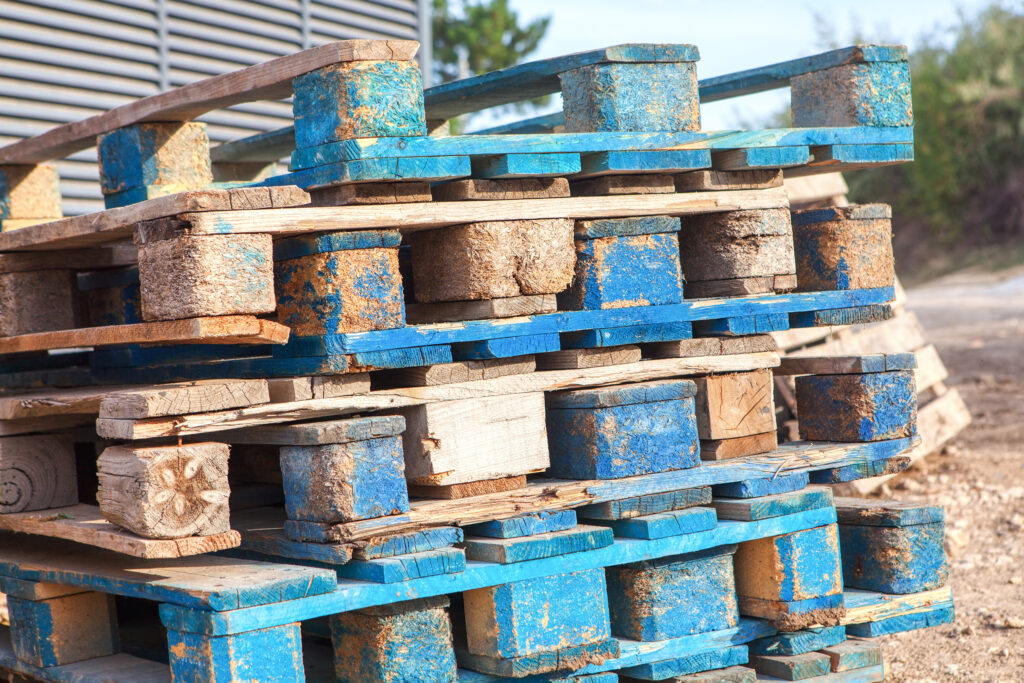
Industry standards recognize repair procedures for damaged pallet components. Components with unacceptable damage may be removed and replaced with components of appropriate material, dimensions, and quality.
That means a pallet with one broken deck board may still have plenty of useful life remaining.
A pallet with extensive structural deterioration, multiple severe failures, decay, contamination, or damage that prevents it from being restored to the required specification may be a different story.
When determining when is a wooden pallet too damaged to repair, businesses should look at the entire pallet rather than focusing on one visible defect.
Broken or Missing Deck Boards Do Not Always Mean the End
Deck boards take a considerable amount of abuse because they directly support the product.
Forklift impacts, heavy loads, dragging, improper handling, and repeated use can cause boards to crack or break. End deck boards are particularly vulnerable to damage. USDA Forest Service research examining damaged pallets found that missing deck boards at pallet ends accounted for more than half of the deck damage observed in the study.
Fortunately, deck boards are commonly replaceable.
If the remainder of the pallet is structurally sound, replacing damaged boards may allow it to safely return to service.
The situation becomes more concerning when numerous deck boards are broken, splitting, loose, badly warped, or deteriorated. At some point, replacing multiple components may make recycling the pallet and recovering its usable lumber more practical than continuing to rebuild it.
Pay Close Attention to Stringer Damage
For stringer pallets, stringers are critical structural components.
They run between the deck boards and help support the load while also providing access for forklifts and pallet jacks.
Stringers can suffer damage from repeated forklift impacts, excessive loads, poor handling, and normal wear.
Small amounts of repairable damage may be addressed professionally. However, severe splits, breaks in critical locations, deterioration, or damage affecting multiple stringers require closer evaluation.
Historical research into pallet repair found that longitudinal breaks and splits outside stringer notches represented more than 80 percent of the stringer damage documented in the pallets studied.
Because stringers are so important to pallet performance, significant damage should never simply be ignored.
When is a wooden pallet too damaged to repair becomes an especially important question when stringer damage affects the pallet’s ability to safely support a load.
When Is a Wooden Pallet Too Damaged to Repair Due to Structural Damage?
One damaged component is very different from an entire pallet showing structural deterioration.
Imagine a pallet with:
- A cracked deck board
- A split stringer
- Several loose fasteners
- A missing bottom board
- Significant warping
Individually, some of those problems might be repairable. Together, they indicate that the pallet has experienced considerable wear.
This is where the question of when is a wooden pallet too damaged to repair becomes especially important.
Repairing one component may make sense. Continually replacing component after component on a severely deteriorated pallet may not.
A professional pallet recycler can evaluate whether enough sound material remains to make repair worthwhile or whether the pallet should instead be dismantled for usable lumber and recycling.
Look for Rot and Decay
Broken wood is not the only concern.
Wooden pallets exposed to prolonged moisture or improper storage conditions can eventually experience deterioration or decay.
Decayed wood loses structural integrity. Even if a board appears intact from a distance, compromised wood may not perform as expected under a heavy load.
When is a wooden pallet too damaged to repair? If rot or decay has weakened several structural components, recycling or replacing the pallet may be safer and more practical than attempting extensive repairs.
Signs that deserve attention include:
- Soft or crumbling wood
- Significant discoloration associated with deterioration
- Areas that break apart easily
- Severe moisture damage
- Unsound knots around critical connections
Pallet inspection guidance includes decay and unsound knots among defects workers should watch for, particularly around fasteners and structural areas.
If deterioration affects important structural components throughout the pallet, replacement or recycling may be more appropriate than repair.
Loose and Protruding Fasteners Need Attention
Pallet nails and other fasteners help hold the entire structure together.
As pallets move through repeated handling cycles, fasteners can loosen or back out of the wood.
A few loose fasteners may be repairable, but they should not simply be ignored.
Protruding nails can damage products, tear packaging, catch on equipment, or create an injury hazard. Loose connections can also allow boards to shift and reduce the pallet’s structural reliability.
When inspecting a pallet, pay attention to nails that are:
- Missing
- Bent
- Backing out
- Protruding
- Surrounded by badly split wood
If fasteners repeatedly fail because the surrounding lumber can no longer hold them securely, the underlying wood may be too deteriorated for a simple repair.
Severe Warping Can Make a Pallet Unusable
A wooden pallet should sit properly and provide a stable platform for its load.
Severe warping can interfere with stacking, automated equipment, forklifts, pallet jacks, and warehouse racking.
Place a questionable pallet on a flat surface. If it rocks significantly, twists, or no longer maintains its proper shape, it should be removed from service and evaluated.
Pallet inspection recommendations specifically identify issues with squareness, flatness, sagging deck boards, and bowed stringer boards as defects requiring attention.
When deciding when is a wooden pallet too damaged to repair, dimensional problems matter because a pallet can have intact boards and still no longer function correctly within a material handling system.
Forklift Damage Can Be More Serious Than It Looks
Forklifts are essential to pallet handling, but they are also a major source of pallet damage.
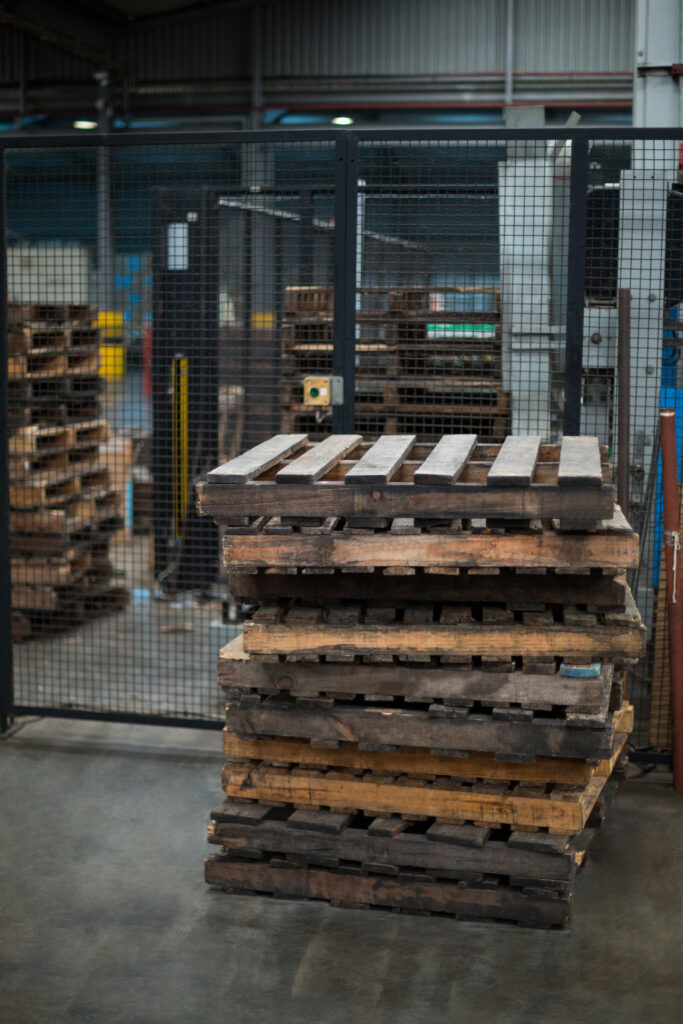
A fork tine striking the side of a pallet can:
- Split a stringer
- Break a block
- Crack a deck board
- Push boards out of alignment
- Damage connections
Some forklift damage is immediately obvious. Other damage may initially look minor.
Before putting a pallet back into circulation after a significant impact, it should be inspected for cracks and structural problems.
A pallet carrying thousands of pounds needs to perform reliably during lifting and movement. Small structural weaknesses can become much more significant when the pallet is under load.
Consider How the Pallet Will Be Used
When is a wooden pallet too damaged to repair? The answer also depends on what you expect the pallet to do after repair.
A pallet being used for a relatively light, floor-supported load faces different stresses than one that will repeatedly carry heavy products or sit unsupported in warehouse racking.
Consider:
- Product weight
- Weight distribution
- Forklift handling frequency
- Racking requirements
- Number of expected reuse cycles
- Shipping environment
- Customer pallet specifications
- Automated material handling equipment
The more demanding the application, the more important pallet condition becomes.
A repair that may be appropriate for one use is not automatically appropriate for every application.
What About Heat Treated Pallets?
Businesses shipping internationally have additional considerations.
Wood packaging material used in regulated international trade may need to meet ISPM 15 requirements and carry the appropriate treatment mark.
Repairing regulated wood packaging is therefore different from simply replacing a broken board on a domestic pallet.
Businesses using heat treated pallets for international shipping should work with a qualified pallet provider that understands the applicable treatment, repair, and marking requirements.
USDA APHIS identifies improper markings, pest evidence, and other conditions that can cause wood packaging material to be considered noncompliant or risky.
If you’re unsure whether a repaired pallet remains suitable for export, don’t guess.
Why Professional Pallet Inspection Matters
Warehouse employees should certainly identify obviously damaged pallets and remove them from service, but deciding whether a pallet should be professionally repaired, recycled, or replaced requires more than simply looking for broken boards.
Professional pallet companies understand how different components contribute to overall performance.
They can determine whether damaged components can be replaced, whether stringers can be properly repaired, whether the pallet meets the required dimensions, and whether enough usable material remains to justify repair.
Modern industry standards establish recognized minimum quality requirements and provide a common foundation for manufacturers, repairers, distributors, and pallet users.
Repairing Pallets Can Reduce Waste
A damaged pallet does not necessarily belong in a landfill.
One of the major advantages of wooden pallets is that individual components can often be repaired, replaced, reused, or recovered.
When a pallet can no longer function safely as a complete pallet, usable lumber may still be recovered for other pallet repairs or recycling applications.
This allows businesses to get more value from wood materials while reducing unnecessary waste.
Pallet repair and recycling can also help businesses manage pallet costs by keeping serviceable materials in circulation longer.
Don’t Wait Until a Pallet Fails
The worst time to discover severe pallet damage is when the pallet is already carrying a valuable load several feet off the ground.
Routine inspection can identify problems before they become failures.
Employees who regularly handle pallets should know how to recognize obvious signs of damage and remove questionable pallets from circulation.
Look for broken or missing components, splits, decay, protruding fasteners, severe warping, loose connections, and previous repairs that appear damaged.
Industry safety guidance recommends looking for issues including broken or missing stringers, sagging deck boards, splits, decay, excessive knots, poorly repaired components, and dimensional problems.
Asking when is a wooden pallet too damaged to repair during routine inspections can help employees identify questionable pallets before they are loaded and returned to service.
When in doubt, set the pallet aside for professional evaluation rather than continuing to use it.
Conclusion
So, when is a wooden pallet too damaged to repair? A single broken board, loose nail, or repairable stringer does not necessarily mean a pallet has reached the end of its useful life. Many wooden pallets can be professionally repaired and safely returned to service.
The decision changes when damage becomes extensive, structural integrity is questionable, deterioration affects multiple components, or restoring the pallet to the necessary condition no longer makes practical or economic sense. The intended application matters as well. A pallet needs to be appropriate for the products, weight, handling equipment, storage system, and shipping environment in which it will be used.
Knowing when is a wooden pallet too damaged to repair helps businesses avoid preventable product damage and safety problems while still getting maximum value from repairable pallets.
If your business has damaged pallets and you’re unsure whether they should be repaired, recycled, or replaced, contact us here with your questions. The Palleton Pallets team can help you determine the right solution for your operation. If you already know what your business needs and are ready to discuss pricing, you can also submit a quote request here for your pallet needs.
Further Reading
National Wooden Pallet and Container Association, Uniform Standards for Wood Pallets
https://woodpackglobal.org/page/packagingstandards
USDA Forest Service, Pallet Repair and Salvage
https://research.fs.usda.gov/treesearch/15451
Michigan State University Environmental Health & Safety, Ten Ways to Spot a Defective Pallet
https://ehs.msu.edu/occ/pit/defective-pallet.html
USDA APHIS, Wood Packaging Material
https://www.aphis.usda.gov/plant-imports/wood-packaging-material